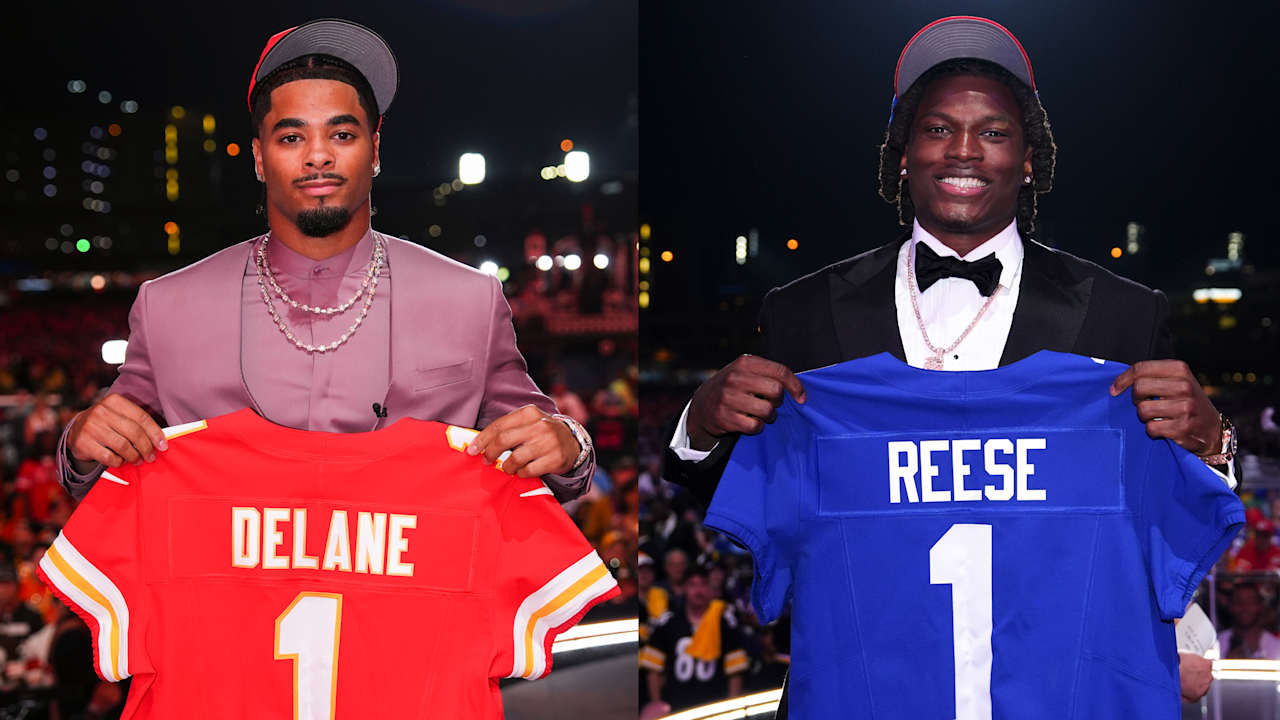
The Los Angeles Rams didn’t just draft a quarterback—they executed a calculated move rooted in long-term vision, roster constraints, and a deep understanding of talent trajectory. When Albert Breer broke down their decision to select Oregon’s Ty Simpson, it wasn’t framed as a splash pick or a fan-pleasing gamble. Instead, Breer highlighted an under-the-radar acquisition shaped by injury insights, quarterback development timelines, and a front office playing chess while others played checkers. This isn’t about who was picked first; it’s about how the Rams positioned themselves to land a specific kind of athlete—and why Simpson fits a very precise mold.
Why Ty Simpson Was Always on the Rams’ Radar
Albert Breer pointed to a quiet but persistent pattern: the Rams’ scouting department had been tracking dual-threat quarterbacks with high athletic ceilings for over 18 months. With Matthew Stafford’s injury history and the uncertainty surrounding Baker Mayfield’s future beyond 2024, L.A. needed a developmental arm—not a Day 1 starter, but a high-upside project.
Simpson, despite limited starting experience at Oregon, embodied that profile. At 6’2”, 215 pounds, with a 4.58-second 40-yard dash and elite agility scores, he presented the physical tools the Rams value. But it wasn’t just measurables. Breer noted that Simpson’s film against top-tier competition—particularly his performance against Ohio State in the Rose Bowl—showed “poise under pressure and an ability to extend plays with his legs without forcing throws.” That combination is rare in this draft class.
The Rams’ interest went beyond highlights. Their scouts reportedly visited Eugene three times during the season, often staying through practice film review sessions with Oregon’s coaching staff. Breer emphasized that these visits weren’t just about evaluating Simpson—they were about understanding how he responded to coaching, handled adversity, and fit within a structured offense. That depth of intel gave L.A. confidence others lacked.
How the Draft Board Shifted in L.A.’s Favor
On paper, Simpson was projected to go in the late second or early third round. But as Breer observed, “teams got cold feet when they saw inconsistent downfield accuracy and questioned his decision-making under pressure.” That created a slide—one the Rams anticipated.
Here’s where the Rams’ draft maneuvering stood out:
- They traded down from pick 62 to 78, acquiring an extra fifth-rounder in the process.
- They let teams like the Vikings, Dolphins, and Texans reach for flashier prospects.
- They waited, knowing Simpson’s athletic profile and age (20 at draft time) gave him a longer development runway.
Breer described this as “value-layered drafting”—not just finding talent, but timing the market. The Rams didn’t force a pick. They let the board come to them. And when Simpson fell to 78, they pounced.
“The Rams didn’t fall in love with a name. They fell in love with a process—and the process led them to Simpson,” Breer noted in his post-draft breakdown.
The Developmental Blueprint Behind the Pick
One of Breer’s most compelling takeaways was how the Rams plan to develop Simpson. This isn’t a “toss him in the fire” scenario. Instead, Los Angeles is building a tailored quarterback curriculum modeled after their successful work with Jalen Hurts in Philadelphia.
The plan includes:

- Year One: Heavy time in the meeting room, learning the playbook, and working on footwork and timing with the second-team offense.
- Spring/Summer: Participation in rookie minicamp and OTAs with a focus on protection reads and situational awareness.
- Year Two: Potential redshirt season with practice squad elevation if needed, or assignment to the Rams’ international development program (a new initiative with ties to the NFL’s Global Markets Program).
Breer highlighted that Sean McVay and offensive coordinator Zac Taylor have already mapped out a 12-month skill progression plan for Simpson—one that prioritizes decision-making over raw arm strength.
This approach reflects a broader shift in NFL quarterback development. No longer are young QBs rushed. The Rams are betting that a patient, structured build-up will yield better long-term results than forcing early snaps.
Why Other Teams Passed on Simpson
Breer’s analysis doesn’t shy away from the risks. Other franchises had legitimate concerns about Simpson:
- Inconsistent passing mechanics, especially on intermediate throws.
- Limited starter experience—only 11 college starts, many in a run-heavy system.
- Durability questions after missing time with a shoulder sprain in 2023.
Teams like the Cowboys and Bills, Breer noted, wanted quarterbacks who could push for a backup role immediately. Simpson wasn’t that guy. He’s a develop-first, play-later prospect.
But the Rams saw something others didn’t: Simpson’s improvement curve. From 2022 to 2023, his completion percentage jumped from 58% to 67%, his TD-to-INT ratio improved from 14:8 to 18:5, and his pressure-adjusted completion rate (per PFF) ranked 4th among Power Five QBs with 300+ dropbacks.
That kind of growth, Breer argued, is more telling than a static scouting report.
“You draft for potential, but you develop for production. The Rams are drafting the 2027 starter, not the 2024 backup.”
The Role of Analytics in the Decision
Behind the scenes, the Rams leaned heavily on data models to validate their gut feelings. Breer revealed that L.A.’s analytics team ran a predictive simulation based on Simpson’s athletic testing, college production, age, and coaching adaptability.
The model projected:
- A 78% probability of becoming a starting-caliber QB within four years.
- High likelihood of excelling in play-action and RPO-heavy systems (a McVay staple).
- Strong recovery rate from early-season mistakes, indicating coachability.
This wasn’t just about gut instinct. It was about aligning scouting reports with algorithmic forecasting—a hybrid approach becoming standard among elite franchises.
Other teams focused on traditional benchmarks: sack rate, deep-ball accuracy, pocket presence. The Rams added layers: cognitive testing scores, injury resilience indices, and even social media sentiment analysis to gauge mental toughness.
Breer called it “next-gen scouting”—and Simpson was its poster child.
How Simpson Fits the Rams’ Offensive Identity
Sean McVay’s offense has evolved. While it was once rooted in tight end-heavy formations and quick passes, it now incorporates more designed QB runs, boot-action concepts, and tempo-based shifts. Simpson’s skill set aligns perfectly.
Key fit factors:
- Athleticism in boot-action: Simpson’s ability to roll right and deliver on the run mirrors early-career Kyler Murray—something McVay studied extensively.
- RPO proficiency: Oregon ran one of the nation’s most active RPO games; Simpson logged over 120 such plays in 2023.
- Quick processing: Despite limited reps, Simpson had one of the fastest average decision times in college football (2.1 seconds, per NFL Next Gen Stats).
Breer noted that during pre-draft interviews, McVay asked Simpson to diagram a specific play from Oregon’s USC game—a mesh concept with a QB keep read. Simpson not only drew it correctly but explained the defensive keys and progression. That level of detail impressed the staff.
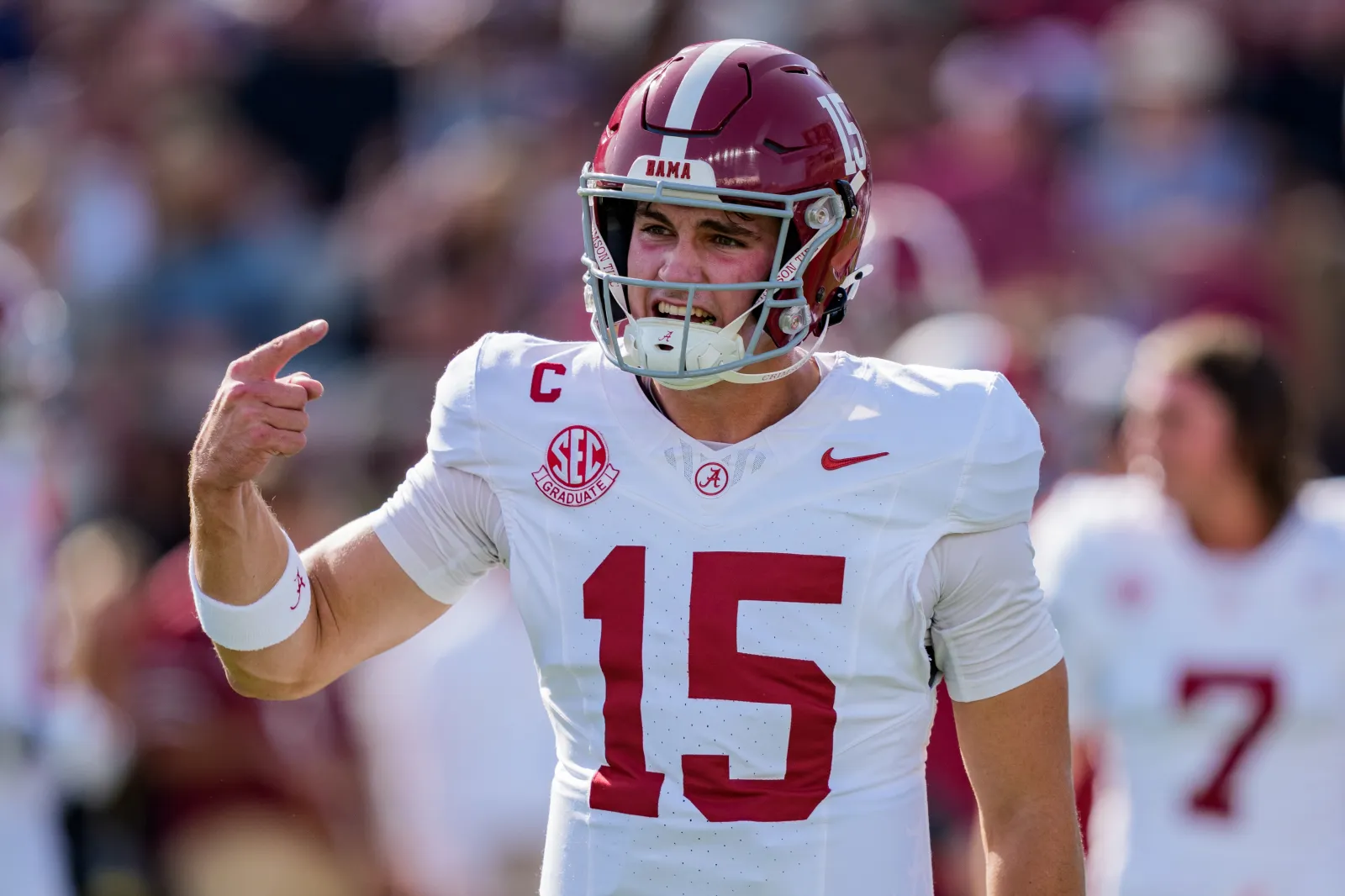
“It wasn’t just that he could run the play,” Breer said. “It was that he understood it. That’s what separates developmental projects from developmental investments.”
Comparing Simpson to Recent Rams Draft Picks
To understand the Rams’ logic, it helps to compare Simpson to past selections:
| Player | Position | Draft Year | Pick | Outcome |
|---|---|---|---|---|
| Odell Beckham Jr. | WR | 2014 (trade) | 12 | Pro Bowl, short tenure |
| Cooper Kupp | WR | 2017 | 69 | Super Bowl LVI MVP |
| Penei Sewell | OT | 2021 | 7 (traded) | Immediate starter in Detroit |
| Ty Simpson | QB | 2024 | 78 | Project, long-term |
What stands out? The Rams have a history of finding value in the second and third rounds, especially with high-ceiling athletes. Kupp was a steal at 69. Simpson, at 78, could follow that path—if the development plan sticks.
Breer pointed to Kupp as the blueprint: a player whose production didn’t scream “future star,” but whose work ethic, coachability, and football IQ made him elite. Simpson, he argues, shares those intangibles.
What’s Next for Ty Simpson and the Rams
The immediate future is clear: Simpson will spend 2024 as the third-string QB, behind Stafford and potential free-agent signee. He’ll absorb the offense, refine his mechanics, and build chemistry with the young receiving corps—especially Jordan Whittington and Zach Charbonnet.
But the long-term vision is bolder.
If Stafford retires after 2025 or 2026, Simpson could enter a competition with whatever bridge QB the Rams sign in the interim. By then, he’ll have two full years of NFL coaching, access to McVay’s system, and the benefit of L.A.’s state-of-the-art training facilities.
Breer’s bottom line? “This isn’t a desperation pick. It’s a patient, intelligent investment in a quarterback archetype the league is moving toward. If Simpson develops as expected, the Rams won’t have just found a starter—they’ll have stayed ahead of the curve.”
For fans, the message is simple: don’t expect fireworks in Year One. Expect progress. Expect growth. And expect the Rams to let the process unfold—on their terms.
FAQ
Why did the Rams draft Ty Simpson in the third round? The Rams saw high developmental upside in Simpson’s athleticism and football IQ. With limited QB depth, they targeted him as a long-term project, especially given his fit in McVay’s evolving offense.
Was Ty Simpson a reach at pick 78? According to Albert Breer, no. While other teams had concerns, the Rams’ extensive scouting and data analysis justified the pick based on potential, not just current production.
How does Ty Simpson compare to Matthew Stafford? They’re different prototypes. Stafford is a pure pocket passer with elite arm talent. Simpson is more mobile, with a playmaking style suited to modern RPO and boot-action systems.
Will Ty Simpson start for the Rams anytime soon? Not immediately. He’s expected to spend 2024 learning the playbook as the third-string QB. A potential starting role could come in 2026 or later.
What makes Simpson a good fit for Sean McVay’s offense? His RPO experience, athleticism on boot-action, and quick decision-making align with McVay’s increasing use of mobile elements in the passing game.
Did injuries affect Simpson’s draft stock? Yes. His 2023 shoulder injury limited reps and raised durability questions, causing some teams to pass. The Rams, however, believed the risk was manageable given his age and recovery.
How do the Rams plan to develop Simpson? Through a structured 12-month program focused on mechanics, situational awareness, and system mastery—similar to their past work with developmental QBs.
FAQ
What should you look for in Albert Breer’s NFL Draft Takeaways: How the Rams Landed Ty Simpson? Focus on relevance, practical value, and how well the solution matches real user intent.
Is Albert Breer’s NFL Draft Takeaways: How the Rams Landed Ty Simpson suitable for beginners? That depends on the workflow, but a clear step-by-step approach usually makes it easier to start.
How do you compare options around Albert Breer’s NFL Draft Takeaways: How the Rams Landed Ty Simpson? Compare features, trust signals, limitations, pricing, and ease of implementation.
What mistakes should you avoid? Avoid generic choices, weak validation, and decisions based only on marketing claims.
What is the next best step? Shortlist the most relevant options, validate them quickly, and refine from real-world results.